



| SNo. | Scientific Name | Locality | Habitat | Basis of Record | Description | Recorded By | Record Number | Island | Source | Date |
|---|---|---|---|---|---|---|---|---|---|---|
| 1 | Phyllostegia brevidens | Locality redacted. Contact Bishop Museum Botany Department for details | Preserved_Specimen | Lydgate, J.M. | Hawaii | BISH | ||||
| 2 | Phyllostegia brevidens | Locality redacted. Contact Bishop Museum Botany Department for details | Preserved_Specimen | Hillebrand, W.B. | Hawaii | BISH | ||||
| 3 | Phyllostegia brevidens | Locality redacted. Contact Bishop Museum Botany Department for details | Rain forest dominated by Ohia, Myrsine, Cheirodendron & Broussaisia. The mint was climbing a tree that was growing from the floor of a collapsed lava tube. | Preserved_Specimen | Giffin, J. | Hawaii | BISH | 1985-04-16 | ||
| 4 | Phyllostegia brevidens | Locality redacted. Contact Bishop Museum Botany Department for details | Acacia-Metrosideros-Cheirodendron montane wet forest with sections of Dicarnopteris fernland. W/ Rubus hawaiiensis, Perrottetia, Broussaisia, Pipturus, Cyrtandra spathulata, Kadua affinis, Machaerina angustifolia, Psychotrira, Diplazium sandwichianum, Clermontia arborescens, Freycinetia, Melico | Preserved_Specimen | vining shrub of 5 m, stems 12 mm @ base, with fruit, 2 plants | Wood, K.R. | 13730 | Maui | BISH | 2009-05-11 |
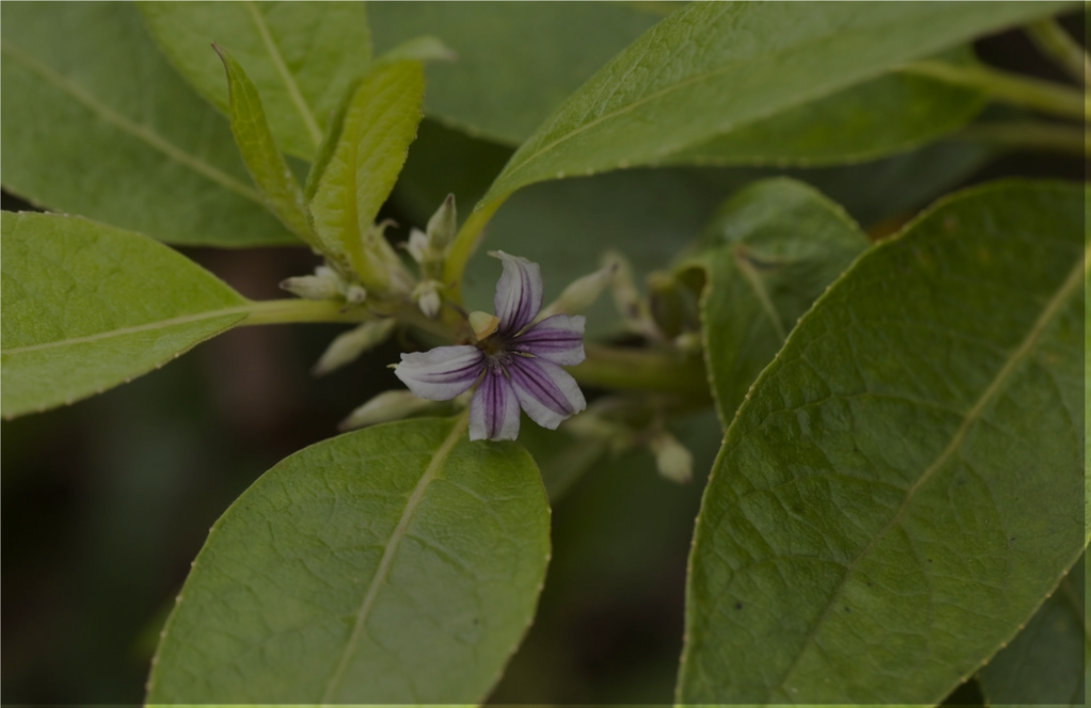
| 5 | Phyllostegia brevidens | Locality redacted. Contact Bishop Museum Botany Department for details | Growing within a moist gully. Open to scattered Metrosideros forest with an open Cibotium understory. | Preserved_Specimen | Sprawling vine. Ht. 10 ft., basal diam. 1 in., coverage 10 ft. x 15 ft., vigor excellent. Flowering profusely, at least 30 terminal inflorescences; flrs. white with a rose streak on lower lip. Stems sub-quadrangular streaked with purple. | Clarke, G. | 574 | Hawaii | BISH | 1981-02-26 |
| 6 | Phyllostegia brevidens | Locality redacted. Contact Bishop Museum Botany Department for details | Growing within a moist gully. Open to scattered Metrosideros forest with an open Cibotium understory. Pahoehoe substrate. | Preserved_Specimen | Sprawling vine. Ht. 10 ft., basal diam. 1 in., coverage 10 ft. x 15 ft., vigor excellent. Flowering profusely, at least 30 terminal inflorescences; flrs. white with a rose streak on lower lip. Stems sub-quadrangular streaked with purple. | Clarke, G. | 574 | Hawaii | BISH | 1981-02-26 |
| 7 | Phyllostegia brevidens | Locality redacted. Contact Bishop Museum Botany Department for details | Acacia koa-Metrosideros polymorpha montane wet forest w/ Melicope clusiifolia, M. balloui, M. ovalis, M. molokaiensis, understory thick w/ pteridophytes on the banks of pristine riparian community. | Preserved_Specimen | 5 m long, branching vine; scandant in Clermontia arboria; stems at base 3 cm in dia; young stems thickly strigose, losing hairs with age; vigorous; fruit dark-green. | Wood, K.R. | 3200 | Maui | BISH | 1994-05-20 |
| 8 | Phyllostegia brevidens | Locality redacted. Contact Bishop Museum Botany Department for details | Mesic to wet koa forest with understory of Perrottetia sandwicensis, Psychotria hawaiiensis, Broussaisia arguta, Hedyotis acuminata. On slope. | Preserved_Specimen | Sprawling in subcanopy; corolla white, fragrant. | Wagner, W.L. | 5897 | Maui | BISH | 1988-03-09 |
| 9 | Phyllostegia brevidens | Locality redacted. Contact Bishop Museum Botany Department for details | ridge; Cheirodendron, Coprosma, Metrosideros. | Preserved_Specimen | large shrub-vine, trailing over and under Cheirodendron, Coprosma, and Metrosideros. | Harrison, B. | 600 | Maui | BISH | 1974-03-13 |
| 10 | Phyllostegia brevidens | Locality redacted. Contact Bishop Museum Botany Department for details | Growing within a moist gully. Open to scattered Metrosideros forest with an open Cibotium understory. | Preserved_Specimen | Sprawling vine. Ht. 10 ft., basal diam. 1 in., coverage 10 ft. x 15 ft., vigor excellent. Flowering profusely, at least 30 terminal inflorescences; flrs. white with a rose streak on lower lip. Stems sub-quadrangular streaked with purple. | Clarke, G. | 574 | Hawaii | BISH | 1981-02-26 |
| 11 | Phyllostegia brevidens | Locality redacted. Contact Bishop Museum Botany Department for details | Growing within a moist gully. Habitat: open to scattered Metrosideros forest with an open Cibotium understory. | Preserved_Specimen | Sprawling vine. Ht. 10 ft., basal diam. 1 in., coverage 10 ft. x 15 ft., vigor excellent. Flowering profusely, at least 30 terminal inflorescences; flrs. white with a rose streak on lower lip. Stems sub-quadrangular streaked with purple. | Clarke, G. | 574 | Hawaii | BISH | 1981-02-26 |
Lorem ipsum dolor sit amet, consectetur adipiscing elit, sed do eiusmod tempor incididunt ut labore et dolore magna aliqua. Ut enim ad minim veniam, quis nostrud exercitation ullamco laboris nisi ut aliquip ex ea commodo consequat. Duis aute irure dolor in reprehenderit in voluptate velit esse cillum dolore eu fugiat nulla pariatur. Excepteur sint occaecat cupidatat non proident, sunt in culpa qui officia deserunt mollit anim id est laborum.
Lorem ipsum dolor sit amet, consectetur adipiscing elit, sed do eiusmod tempor incididunt ut labore et dolore magna aliqua. Ut enim ad minim veniam, quis nostrud exercitation ullamco laboris nisi ut aliquip ex ea commodo consequat. Duis aute irure dolor in reprehenderit in voluptate velit esse cillum dolore eu fugiat nulla pariatur. Excepteur sint occaecat cupidatat non proident, sunt in culpa qui officia deserunt mollit anim id est laborum.
Lorem ipsum dolor sit amet, consectetur adipiscing elit, sed do eiusmod tempor incididunt ut labore et dolore magna aliqua. Ut enim ad minim veniam, quis nostrud exercitation ullamco laboris nisi ut aliquip ex ea commodo consequat. Duis aute irure dolor in reprehenderit in voluptate velit esse cillum dolore eu fugiat nulla pariatur. Excepteur sint occaecat cupidatat non proident, sunt in culpa qui officia deserunt mollit anim id est laborum.
Lorem ipsum dolor sit amet, consectetur adipiscing elit, sed do eiusmod tempor incididunt ut labore et dolore magna aliqua. Ut enim ad minim veniam, quis nostrud exercitation ullamco laboris nisi ut aliquip ex ea commodo consequat. Duis aute irure dolor in reprehenderit in voluptate velit esse cillum dolore eu fugiat nulla pariatur. Excepteur sint occaecat cupidatat non proident, sunt in culpa qui officia deserunt mollit anim id est laborum.
Lorem ipsum dolor sit amet, consectetur adipiscing elit, sed do eiusmod tempor incididunt ut labore et dolore magna aliqua. Ut enim ad minim veniam, quis nostrud exercitation ullamco laboris nisi ut aliquip ex ea commodo consequat. Duis aute irure dolor in reprehenderit in voluptate velit esse cillum dolore eu fugiat nulla pariatur. Excepteur sint occaecat cupidatat non proident, sunt in culpa qui officia deserunt mollit anim id est laborum.
Lorem ipsum dolor sit amet, consectetur adipiscing elit, sed do eiusmod tempor incididunt ut labore et dolore magna aliqua. Ut enim ad minim veniam, quis nostrud exercitation ullamco laboris nisi ut aliquip ex ea commodo consequat. Duis aute irure dolor in reprehenderit in voluptate velit esse cillum dolore eu fugiat nulla pariatur. Excepteur sint occaecat cupidatat non proident, sunt in culpa qui officia deserunt mollit anim id est laborum.
Thank you for your interest in submitting an image of
Select your image and leave a brief description of your photo below.