




| SNo. | Scientific Name | Locality | Habitat | Basis of Record | Description | Recorded By | Record Number | Island | Source | Date |
|---|---|---|---|---|---|---|---|---|---|---|
| 1 | Heliotropium curassavicum | Nihoa | among rocks on beach and up to 50 m altitude. | Preserved_Specimen | Sprawling herb. | Caum, E.L. | 77 | Nihoa | BISH | 1923-06-17 |
| 2 | Heliotropium curassavicum | Lihue District: Nawiliwili Bay, North shore by Niumalu tidal flats along Hulia Stream | Strand vegetation with naturalized species including Thespesia, Rhizophora, and Pluchea. | Preserved_Specimen | Perennial herb with taproot and prostrate stems, leaves succulent, bluish green. Corolla White. Common locally. | Lorence, D.H. | 5139 | Kauai | BISH | 1987-04-03 |
| 3 | Heliotropium curassavicum | Nihoa | Above beach | Preserved_Specimen | Trailing herb, flower-small white, fruit. | Christophersen, E. | 6 | Nihoa | BISH | 1924-07-09 |
| 4 | Heliotropium curassavicum | Waipahu: Kipapa Gulch | Along roadside. | Preserved_Specimen | Weed. | Hosaka, E.Y. | 63 | Oahu | BISH | 1932-09-25 |
| 5 | Heliotropium curassavicum | West side of island, near lagoon, around the lagoon | In hard, salty soil | Preserved_Specimen | Prostrate vine; flowers white. 20-40 cm. high | Daniel, C.W. | 10 | Laysan Island | BISH | 1959-07-25 |
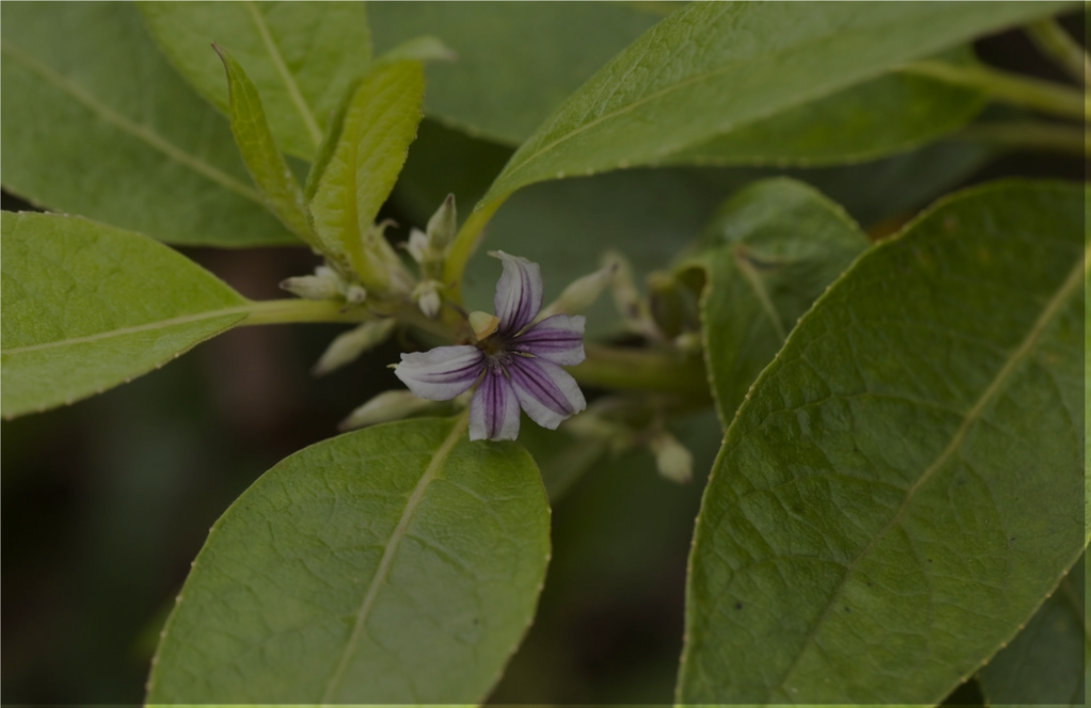
| 6 | Heliotropium curassavicum | Kuliouou Beach | Occasional in full sun on filled land, dredge spoil. | Preserved_Specimen | Prostrate, very glaucous, leaves fleshy, flowers white with purplish centers. | Fosberg, F.R. | 55597 | Oahu | BISH | 1974-10-12 |
| 7 | Heliotropium curassavicum | Waimea District. Kawaiele Waterbird Sanctuary Coastal wetlands. | W/ Bacopa monnieri, Dodonaea viscosa, Fimbristylis cymosa, Heteropogon contortus, Jacquemontia sandwicensis, Nama sandwicensis, Sesuvium portulacastrum, Sida fallax, Vitex rotundifolia, Vigna | Preserved_Specimen | Small herb with glabrous, bluish-green succulent leaves. Petals white, corolla throat yellow. | Walsh, S. | 788 | Kauai | BISH | 2021-01-07 |
| 8 | Heliotropium curassavicum | Waiakapuaa, back of beach. | Wet sand flat back of beach. | Preserved_Specimen | Foliage glaucous, flowers white. | St.John, H. | 22635 | Lanai | BISH | 1947-04-05 |
| 9 | Heliotropium curassavicum | Kona: north of Kailua village | On sand dunes near ocean. | Preserved_Specimen | Bryan, L.W. | 2 | Hawaii | BISH | 1957-06-18 | |
| 10 | Heliotropium curassavicum | Nihoa | among rocks on beach and up to 50 m. atlitude. | Preserved_Specimen | Sprawling herb. | Caum, E.L. | 77 | Nihoa | BISH | 1923-06-17 |
| 11 | Heliotropium curassavicum | Kau: near South Point | Around site of old Waiakukini. | Preserved_Specimen | Wayside plants. | Bryan Jr., E.H. | Hawaii | BISH | 1954-05-23 | |
| 12 | Heliotropium curassavicum | Halalii Lake, S border | Exsiccated salty flat | Preserved_Specimen | Erect, leaves glaucous; flowers white. | St.John, H. | 22736 | Niihau | BISH | 1947-08-12 |
| 13 | Heliotropium curassavicum | Kii Landing | Near shore. | Preserved_Specimen | Prostrate. | Christensen, C. | 138 | Niihau | BISH | 1977-02-12 |
| 14 | Heliotropium curassavicum | Nihoa | steep slope, just above sand beach (W. end) | Preserved_Specimen | Yen, D.E. | 1008 | Nihoa | BISH | 1969-05-01 | |
| 15 | Heliotropium curassavicum | Central Maui, southern coast of isthmus, Kealia Pond National Wildlife Refuge | On dike margin of dry impoundment basin near main office. Spreading groundcover forming small patches. Growing with Eclipta, Pluchea, Cyperus laevigatus. Occasional. | Preserved_Specimen | Glaucous green, glabrous leaves. Flowering. | Imada, C. | 9819 | Maui | BISH | 1998-10-06 |
| 16 | Heliotropium curassavicum | Beach NW Kahalui | Exposed bluff. | Preserved_Specimen | Fosberg, F.R. | 9824 | Maui | BISH | 1933-08-17 | |
| 17 | Heliotropium curassavicum | Molokini Islet | Rare at base of inner slope. | Preserved_Specimen | Young plants only. | Hobdy, R.W. | 1230 | Maui | BISH | 1982-02-14 |
| 18 | Heliotropium curassavicum | Kau District: South Point | Windswept coast. | Preserved_Specimen | Wagner, W.L. | 4889 | Hawaii | BISH | 1983-07-28 | |
| 19 | Heliotropium curassavicum | Ewa Beach | Not common, on limestone at coast. | Preserved_Specimen | Davis, J. | 85 | Oahu | BISH | 1979-02-23 | |
| 20 | Heliotropium curassavicum | One plant growing on the SW side of island | among Eragrostis variabilis and Ipomoea pes-caprae. | Preserved_Specimen | Tsuda, R.T. | 508 | Laysan Island | BISH | 1963-12-09 | |
| 21 | Heliotropium curassavicum | Pouhala Marsh, Waipahu | Along the edges at the mauka side (Bridge side) of the pond. In coarse, rocky, wet to mesic soil (fill material). Full sun. Salt lines on the soil. | Preserved_Specimen | Erect to trailing, succulent herbaceaous to slightly woody at base. Leaves bluish-green, fleshy, hairless. Flowers small, white corrola with purple and yellow centers, in scorpoid coils. | Crago, L.M. | 2005032 | Oahu | BISH | 2005-01-24 |
| 22 | Heliotropium curassavicum | Kahuku; Punahoolapa Wetland | In moist soil. | Preserved_Specimen | Engilis Jr., A. | 9222 | Oahu | BISH | 1992-06-11 | |
| 23 | Heliotropium curassavicum | Mokulua, north islet | Locally frequent. Near the sea on volcanic soil. | Preserved_Specimen | Egler, F.E. | 37257 | Oahu | BISH | 1937-08-22 | |
| 24 | Heliotropium curassavicum | Mokolii | A few patches in bare spots near coast. | Preserved_Specimen | Starr, F. | 5041958 | Oahu | BISH | 2005-04-19 | |
| 25 | Heliotropium curassavicum | Between Maalae and Honokoa Bay, on low coastal cliffs | Growing in sandy soil just above the salt spray, on low coastal cliffs. | Preserved_Specimen | A sparse vine of fair vigor. | Clarke, G. | 354 | Kahoolawe | BISH | 1980-04-21 |
| 26 | Heliotropium curassavicum | Diamond Head Crater | Dried border of lake bed. | Preserved_Specimen | St.John, H. | 17994 | Oahu | BISH | 1937-05-28 | |
| 27 | Heliotropium curassavicum | Nihoa | steep slope, just above sand beach (wierd) | Preserved_Specimen | Yen, D.E. | 1008 | Nihoa | BISH | 1969-05-01 | |
| 28 | Heliotropium curassavicum | NE corner of Kanapou Bay | Growing on a talus slope, siding a small cove with a boulder beach strewn with a great amount of flotsam. Others plants included Euphorbia celastroides, Argemone glauca, Waltheria, Prosopis, Capparis and Jacquemontia. | Preserved_Specimen | Clarke, G. | 400 | Kahoolawe | BISH | 1980-04-23 | |
| 29 | Heliotropium curassavicum | Mahana, Lae Wahie, estuary of stream valley | On sand. | Preserved_Specimen | Prostrate. Flower white. | St.John, H. | 18835 | Lanai | BISH | 1938-04-13 |
| 30 | Heliotropium curassavicum | Laysan | Down by lagoon. | Preserved_Specimen | Butler, G. | Laysan Island | BISH | 1959-04-30 | ||
| 31 | Heliotropium curassavicum | Former Naval Air Station Barbers Point, Northern Trap & Skeet Range | On bare scraped limestone outcropping. With Cenchrus ciliaris, Sida falax, Leucaena leucocephala, Pithecellobium dulce, and Waltheria indica. | Preserved_Specimen | Greyish green leaves and white flowers. Prostrate herb <7 cm tall. No odor. | BISH staff | 48 | Oahu | BISH | 2021-05-04 |
| 32 | Heliotropium curassavicum | Nihoa | small batch W. end of sand beach, nothing much on it. | Preserved_Specimen | Bryan Jr., E.H. | 4 | Nihoa | BISH | 1923-06-13 | |
| 33 | Heliotropium curassavicum | Road to Kaena Point from the Waianae side | Banks at shoreline. | Preserved_Specimen | Takeuchi, W.N. | 37 | Oahu | BISH | 1984-01-28 | |
| 34 | Heliotropium curassavicum | Bent Rock, above Dog's Head | Ergrostis variabilis, Sida fallax, Pritchardia remota, Sesbania tomentosa, Chenopodium, Chamaeyce celastroides, Tribulus cistoides, Heliotropium curassavicum, Schiedea verticillata, Portulaca villosa | Preserved_Specimen | low sprawling; fruit | Perlman, S. | 19297 | Nihoa | BISH | 2004-08-18 |
| 35 | Heliotropium curassavicum | Windward side of Waikea Golf Course along narrow maintainance road | Sandy substrate. | Preserved_Specimen | Corn, C. | Kauai | BISH | 1977-09-24 | ||
| 36 | Heliotropium curassavicum | North Kona District: Kohaniki anchialine pond | Found growing among the rocks and in the small pockets near the pond. | Preserved_Specimen | Funk, E.J. | 202 | Hawaii | BISH | 1990-04-23 | |
| 37 | Heliotropium curassavicum | Manana (Rabbit) Island | Ledges on steep cliffs. | Preserved_Specimen | Leaves fleshy, Bluish-Gray. | Fosberg, F.R. | 12824 | Oahu | BISH | 1936-01-18 |
| 38 | Heliotropium curassavicum | Kawaihoa Point, north base, | Wet seep on cliff | Preserved_Specimen | St.John, H. | 22786 | Niihau | BISH | 1947-08-13 | |
| 39 | Heliotropium curassavicum | Molokini Islet | Occasional. A few dozen patches draping over sheer wall on inner slope in middle part of islet near coast and in other moist open areas. | Preserved_Specimen | Starr, F. | 6040508 | Maui | BISH | 2006-04-05 | |
| 40 | Heliotropium curassavicum | Diamond Head Crater | Dried mud flat. | Preserved_Specimen | Flowers white. Plant prostrate, leaves fleshy. | Fosberg, F.R. | 13900 | Oahu | BISH | 1937-05-28 |
| 41 | Heliotropium curassavicum | 1406 Houghtailing Street | In yard. | Preserved_Specimen | Weed. Plant erect; leaves thick, succulent, blue-green; flowers bluish. | Coker, A.H. | Oahu | BISH | 1952-04-08 | |
| 42 | Heliotropium curassavicum | 5 miles SW of Ewa, 0.5 miles east of Barbers Point | Sandy soil behind dunes with Pluchea indica, Sesuvium etc. | Preserved_Specimen | Henrickson, J.S. | 3825 | Oahu | BISH | 1969-07-05 | |
| 43 | Heliotropium curassavicum | Oahu R.R., Dillingham Boulevard, Kalihi Kai | Railroad embankment, coral rubble. | Preserved_Specimen | Prostrate, fleshy, very glaucous, flowers white. | Fosberg, F.R. | 27106 | Oahu | BISH | 1946-10-12 |
| 44 | Heliotropium curassavicum | Honolulu District: Koko Head | Indigenous. Very sparsely scattered throughout area, but on increase east of Ihiihilauakea Crater. | Preserved_Specimen | Bruegmann, M.M. | 156 | Oahu | BISH | 1984-07-13 | |
| 45 | Heliotropium curassavicum | East Maui, Kaunauhane District; near Kamanamana Point | On lava | Preserved_Specimen | Medeiros, A.C. | 592 | Maui | BISH | 1983-11-20 | |
| 46 | Heliotropium curassavicum | SW coast of island near lighthouse, on rocky cliff | Growing on rocky cliff with very little vegetation, Few scattered Sida fallax, Atriplex semibaccata, and Prosopis pallida. | Preserved_Specimen | Low succulent plant. Flowers white, whole plant bluish. | Cuddihy, L.W. | 350 | Kahoolawe | BISH | 1980-04-21 |
| 47 | Heliotropium curassavicum | Waimanalo Bay; Keohikaipu Islet | On basalt rock and under slopes. | Preserved_Specimen | Prostrate, glaucous; flowers white. | Fosberg, F.R. | 14065 | Oahu | BISH | 1937-06-15 |
| 48 | Heliotropium curassavicum | Laysan | Growing abundantly on the salt marsh about lagoon | Preserved_Specimen | Bryan, W.A. | Laysan Island | BISH | 1903-04-01 | ||
| 49 | Heliotropium curassavicum | Sand Island | Growing in sand at back of beach. | Preserved_Specimen | A somewhat decumbent herb which has white flowers with a greenish center. | Herbst, D.R. | 520 | Oahu | BISH | 1967-08-10 |
| 50 | Heliotropium curassavicum | Maunalua: Hanauma Bay | Upper Beach | Preserved_Specimen | Grant, M.L. | 7055 | Oahu | BISH | 1934-07-12 | |
| 51 | Heliotropium curassavicum | Honolulu: Ala Moana Boulevard | Roadside | Preserved_Specimen | Prostrate to ascending, glaucous. | Fosberg, F.R. | 12226 | Oahu | BISH | 1935-07-11 |
| 52 | Heliotropium curassavicum | Laysan | With Sesuvium portulacastrum and a sedge, these the only plants on the saline flats immediately surrounding the highly salty lagoon in the central part of the island. | Preserved_Specimen | Flowers white; herbage glaucous. | Carlquist, S. | 2278 | Laysan Island | BISH | 1966-09-18 |
| 53 | Heliotropium curassavicum | Ca. 200 yds, east of the light house at Barber's Point. | Arid, sandy region behind beach. Assoc. w/ Pluchea indica, P. odorata, Batis, Lycium, Sesuvium, Spergularia, sporobolus virg. | Preserved_Specimen | Herbst, D.R. | 503 | Oahu | BISH | 1967-05-21 | |
| 54 | Heliotropium curassavicum | Kaneohe: Moku Manu (S islet) | Thin guano cover on basaltic rocks. Found occasionally near landing place, not found elsewhere. | Preserved_Specimen | Leaves glaucous, flowers white, prostrate. | Fosberg, F.R. | 14074 | Oahu | BISH | 1937-06-18 |
| 55 | Heliotropium curassavicum | Laysan | Preserved_Specimen | These small herbs were growing in the damp soil by the lagoon on the northwest side and in flower. | Long, C.R. | 2401 | Laysan Island | BISH | 1964-09-19 | |
| 56 | Heliotropium curassavicum | Kailua: Mokulua Island, S Islet | Talus. | Preserved_Specimen | Stems prostrate, leaves fleshy, glaucous, flowers white. | Fosberg, F.R. | 12904 | Oahu | BISH | 1936-02-16 |
| 57 | Heliotropium curassavicum | Koolau Poko District; Mokapu Peninsula Marine Corps Base Hawaii, Kaneohe Bay, Hale Koa Beach | Occasional on compacted soil in dry disturbed area back of the beach. | Preserved_Specimen | Prostrate herb w/dull, grayish-green foliage. flws white w/yellow throat. | Herbst, D.R. | 9741 | Oahu | BISH | 1995-12-05 |
| 58 | Heliotropium curassavicum | Kaena: dirt road to Kaena Point (from the Waianae side) | On banks above the shoreline. | Preserved_Specimen | Takeuchi, W.N. | 33 | Oahu | BISH | 1984-01-28 | |
| 59 | Heliotropium curassavicum | Popoia; small island near Kailua | Sand deposit on coral rock. | Preserved_Specimen | Prostrate, glaucous, flowers white, fruit of 4 fleshy drupes, 5 mm. in diameter. | Fosberg, F.R. | 10588 | Oahu | BISH | 1934-01-28 |
| 60 | Heliotropium curassavicum | Mokeehia, offshore islet, S of Puu Koae, Kahakuloa | Chenopodium oahuense, Heliotropium curassavicum, Chamaesyce celastroides, Lycium sandwicense, Osteomeles anthyllidifolia, Panicum fauriei, Sesuvium portulacastrum, Sida fallax | Preserved_Specimen | herb; decumbent stems; leaves blue green or green white | Wood, K.R. | 11177 | Maui | BISH | 2005-04-04 |
| 61 | Heliotropium curassavicum | Above bay at Papa Kolea. | Sandy banks above bay at Papa Kolea. | Preserved_Specimen | Prostrate herb. Leaves fleshy, frosty-gray-green. Flrs white. | Lane, I.E. | 49550 | Hawaii | BISH | 1949-12-26 |
| 62 | Heliotropium curassavicum | Lae Wahie, near | On arid clay close to ocean. | Preserved_Specimen | Degener, O. | 28610 | Lanai | BISH | 1963-07-24 | |
| 63 | Heliotropium curassavicum | Makua; top of beach | Beach sand. | Preserved_Specimen | Prostrate, Flowers white. | St.John, H. | 9945 | Oahu | BISH | 1929-10-20 |
| 64 | Heliotropium curassavicum | Ewa | In cane field. | Preserved_Specimen | Weed. | Skinner, S.A. | 3 | Oahu | BISH | 1928-10-11 |
| 65 | Heliotropium curassavicum | Puu Koae Islet | A few plants on the lower, more barren west slope. | Preserved_Specimen | Hobdy, R.W. | 1947 | Kahoolawe | BISH | 1984-02-11 | |
| 66 | Heliotropium curassavicum | Ala Wai Harbor | Along the sandy strip near the lagoon. | Preserved_Specimen | Petals white. | Welton, P. | 65 | Oahu | BISH | 1988-11-12 |
| 67 | Heliotropium curassavicum | Sand Island | Halophyte in sandy soil near beach w/Helianthus & Sesuvium. | Preserved_Specimen | Corolla white with lillac to purple center. | Nishihara, C. | 879 | Oahu | BISH | 1971-09-06 |
| 68 | Heliotropium curassavicum | Ala Wai Park, near community gardens | Sandy area near canal, apparently saline soil. Full sun, not particularly moist | Preserved_Specimen | Faccenda, K. | 1782 | Oahu | BISH | 2021-05-08 | |
| 69 | Heliotropium curassavicum | East Maui, Hana District, SE of Hamoa to Waioka | Coastal pasture lands. | Preserved_Specimen | Prostrate herb just above high tide line. Leaves glaucous, blue-green, succulent. Flowers white. | Flynn, T.W. | 2564 | Maui | BISH | 1987-10-27 |
| 70 | Heliotropium curassavicum | Sand Island | In sand. | Preserved_Specimen | Herbst, D.R. | 484 | Oahu | BISH | 1967-05-15 | |
| 71 | Heliotropium curassavicum | Kaula Rock | Preserved_Specimen | Rare. | Daehler, R. | 19 | Kaula Rock | BISH | 1976-01-20 | |
| 72 | Heliotropium curassavicum | Ewa Beach | Preserved_Specimen | Char, W.P. | 154 | Oahu | BISH | 1982-01-30 | ||
| 73 | Heliotropium curassavicum | Keauhou Coast | Preserved_Specimen | Leaves: bluish-green. Petals: white, 5. Terminal spikes: one-sided; maturing at base first. | Fagerlund, G.O. | 362 | Hawaii | BISH | 1943-02-17 | |
| 74 | Heliotropium curassavicum | Kaena: S of Kaena Point | Preserved_Specimen | Semi-prostrate-erect herb. Leaves grey. Flowers white. | van Royen, P. | 10243 | Oahu | BISH | 1968-06-03 | |
| 75 | Heliotropium curassavicum | Paomai Coast | Preserved_Specimen | Munro, G.C. | 87 | Lanai | BISH | 1913-09-13 | ||
| 76 | Heliotropium curassavicum | Tern Islet | Preserved_Specimen | Herb with silvery foliage, white flowers; Occasional throughout the island. | Herbst, D.R. | 6248 | French Frigate Shoals | BISH | 1978-09-11 | |
| 77 | Heliotropium curassavicum | Keehi Lagoon; One House Island | Preserved_Specimen | Decumbent herb with gray-green foliage; white flowers. | Herbst, D.R. | 6161 | Oahu | BISH | 1978-07-29 | |
| 78 | Heliotropium curassavicum | Keehi Lagoon; Sand islet at inner north-west corner of triangle formed by seaplane runways | Preserved_Specimen | Occasional to common. | Herbst, D.R. | 1951 | Oahu | BISH | 1971-06-13 | |
| 79 | Heliotropium curassavicum | Mokeehia, Maui | Preserved_Specimen | Occasional. Forming mats on small hill. Scattered plants on ridges and muddy slopes. | Starr, F. | 504045 | Maui | BISH | 2005-04-04 | |
| 80 | Heliotropium curassavicum | Kealia Pond, salt flat | Preserved_Specimen | white flowers, silvery leaves | Abbott, D.P. | 0.16756 | Maui | BISH | 1984-07-01 | |
| 81 | Heliotropium curassavicum | Kaena; S of Kaena Point | Preserved_Specimen | Semi-prostrate-erect herb. Leaves grey. Flowers white. | van Royen, P. | 10243 | Oahu | BISH | 1968-06-03 | |
| 82 | Heliotropium curassavicum | Keehi Lagoon: Coconut Island | Preserved_Specimen | Decumbent herb with gray-green foliage, white flowers. | Herbst, D.R. | 6153 | Oahu | BISH | 1978-07-29 | |
| 83 | Heliotropium curassavicum | Mokapu Peninsula, Ulapau Head | Preserved_Specimen | Leaves glaucous. Plant prostrate, flowers white. | Fosberg, F.R. | 10903 | Oahu | BISH | 1935-05-26 | |
| 84 | Heliotropium curassavicum | Mokeehia Island, off Hakuhee Point, Kahakuloa, West Maui | Preserved_Specimen | herb with gray-green foliage, white flowers. | Kepler, A.K. | 25 | Maui | BISH | 1981-07-19 | |
| 85 | Heliotropium curassavicum | East shore of island, near lagoon around entire island | Preserved_Specimen | Flower white; prostrate vine. | Daniel, C.W. | 26 | Laysan Island | BISH | 1959-07-26 | |
| 86 | Heliotropium curassavicum | Kaula Rock | Preserved_Specimen | Daehler, R. | 8 | Kaula Rock | BISH | 1971-08-17 | ||
| 87 | Heliotropium curassavicum | Puu Koae Islet | Preserved_Specimen | Higashino, P.K. | 8058 | Kahoolawe | BISH | 1978-11-27 | ||
| 88 | Heliotropium curassavicum | Black Point, near Diamond Head | Preserved_Specimen | Garber, D.W. | 433 | Oahu | BISH | 1920-06-20 | ||
| 89 | Heliotropium curassavicum | Lehua Rock | Preserved_Specimen | Caum, E.L. | 19 | Lehua Rock | BISH | 1931-04-19 | ||
| 90 | Heliotropium curassavicum | Kaunakakai, next to Cook's office | Preserved_Specimen | St.John, H. | 12440 | Molokai | BISH | 1932-12-22 | ||
| 91 | Heliotropium curassavicum | Kailua: Lanikai; Mokulua (North Island) | Preserved_Specimen | Herbst, D.R. | 6004 | Oahu | BISH | 1978-02-07 | ||
| 92 | Heliotropium curassavicum | Makapuu Point: Kaohikaipu Islet | Preserved_Specimen | Lamoureux, C.H. | 4090 | Oahu | BISH | 1967-08-10 | ||
| 93 | Heliotropium curassavicum | Keehi Lagoon; Shack Island | Preserved_Specimen | Herbst, D.R. | 6173 | Oahu | BISH | 1978-07-29 | ||
| 94 | Heliotropium curassavicum | Mokuhooniki, east end of island | Preserved_Specimen | Hobdy, R.W. | 1135 | Molokai | BISH | 1981-09-08 | ||
| 95 | Heliotropium curassavicum | Kaupoa District | Preserved_Specimen | Summers, C.C. | Molokai | BISH | 1984-08-14 | |||
| 96 | Heliotropium curassavicum | Laysan | Preserved_Specimen | Beardsley, J.W. | Laysan Island | BISH | 1962-06-15 | |||
| 97 | Heliotropium curassavicum | Mokolu | Preserved_Specimen | Rogers, D.P. | Oahu | BISH | 1947-05-17 | |||
| 98 | Heliotropium curassavicum | Kaena | Preserved_Specimen | Pearsall, G.A. | Oahu | BISH | 1958-05-03 | |||
| 99 | Heliotropium curassavicum | Coral Flats | Preserved_Specimen | Woolford, H.A. | Oahu | BISH | 1957-02-24 | |||
| 100 | Heliotropium curassavicum | Waialua | Preserved_Specimen | Rock, J.F.C. | Oahu | BISH | ||||
| 101 | Heliotropium curassavicum | Laysan | Preserved_Specimen | Schauinsland, H.H. | Laysan Island | BISH | 1896-07-03 | |||
| 102 | Heliotropium curassavicum | Popoia; small island near Kailua | Preserved_Specimen | Stokes, J.F.G. | Oahu | BISH | 1915-11-01 | |||
| 103 | Heliotropium curassavicum | Oahu | Preserved_Specimen | Pukui, M.K. | Oahu | BISH | 1931-01-01 | |||
| 104 | Heliotropium curassavicum | Kau, Kalae | Preserved_Specimen | Meinecke, W.H. | Hawaii | BISH | 1960-08-19 | |||
| 105 | Heliotropium curassavicum | Molokai | Preserved_Specimen | Stokes, J.F.G. | Molokai | BISH | 1909-01-01 | |||
| 106 | Heliotropium curassavicum | Islet off Malaekahana-Mokuauia | Preserved_Specimen | Neal, M.C. | Oahu | BISH | 1938-06-19 | |||
| 107 | Heliotropium curassavicum | Laie, nearby Mokuauia Island | Preserved_Specimen | Corn, C. | Oahu | BISH | 1977-11-12 | |||
| 108 | Heliotropium curassavicum | Fort Weaver Road | Preserved_Specimen | Woolford, H.A. | Oahu | BISH | 1956-06-04 | |||
| 109 | Heliotropium curassavicum | Salt Lake | Preserved_Specimen | Forbes, C.N. | Oahu | BISH | 1909-03-18 | |||
| 110 | Heliotropium curassavicum | Gravel beach landing | Preserved_Specimen | Walker, R. | Nihoa | BISH | 1964-03-06 | |||
| 111 | Heliotropium curassavicum | Kauai | Preserved_Specimen | Handy, E.S. | Kauai | BISH | 1930-01-01 | |||
| 112 | Heliotropium curassavicum | Mokulua islets, off Lanikai | Preserved_Specimen | Neal, M.C. | Oahu | BISH | 1936-06-14 | |||
| 113 | Heliotropium curassavicum | Goat Island | Preserved_Specimen | Neal, M.C. | Oahu | BISH | 1936-07-26 | |||
| 114 | Heliotropium curassavicum | Ponds southern end | Preserved_Specimen | Stokes, J.F.G. | Niihau | BISH | 1912-01-01 | |||
| 115 | Heliotropium curassavicum | Mana | Preserved_Specimen | St.John, H. | Kauai | BISH | 1926-06-12 | |||
| 116 | Heliotropium curassavicum | Preserved_Specimen | Marzan, M. | Niihau | BISH | 2025-03-08 | ||||
| 117 | Heliotropium curassavicum | Kanalo Valley, sand dunes opposite mouth of valley | Preserved_Specimen | Robinson, A.E. | Niihau | BISH | 1947-12-30 | |||
| 118 | Heliotropium curassavicum | unknown | Preserved_Specimen | Mann, H. | 50 | BISH | 1864-01-01 | |||
| 119 | Heliotropium curassavicum | Koko Head region | Preserved_Specimen | Neal, M.C. | Oahu | BISH | 1930-08-06 | |||
| 120 | Heliotropium curassavicum | Lualualei Beach | Preserved_Specimen | Forbes, C.N. | 1930 | Oahu | BISH | 1914-07-01 | ||
| 121 | Heliotropium curassavicum | Kaemi Islet | Preserved_Specimen | Kepler, A.K. | 71 | Maui | BISH | 1982-06-18 | ||
| 122 | Heliotropium curassavicum | Limestone Point | Preserved_Specimen | Munro, G.C. | 411 | Lanai | BISH | 1929-04-24 | ||
| 123 | Heliotropium curassavicum | Visitor Center & Main ruins, Puuhonua o Honaunau National Historical Park | Preserved_Specimen | Predominantly exotic vegetation. | Higashino, P.K. | 10328 | Hawaii | BISH | 1984-04-08 | |
| 124 | Heliotropium curassavicum | Tern Islet | Preserved_Specimen | Herb with silvery foliage, white flowers. | Herbst, D.R. | 6223 | French Frigate Shoals | BISH | 1978-09-11 | |
| 125 | Heliotropium curassavicum | Kaula Rock | Preserved_Specimen | Caum, E.L. | 7 | Kaula Rock | BISH | 1932-08-17 | ||
| 126 | Heliotropium curassavicum | Lehua Rock | Preserved_Specimen | Caum, E.L. | 19 | Lehua Rock | BISH | 1931-04-19 | ||
| 127 | Heliotropium curassavicum | Kaena; S of Kaena Point | Preserved_Specimen | Semi-prostrate-erect herb. Leaves grey. Flowers white. | van Royen, P. | 10243 | Oahu | BISH | 1968-06-03 | |
| 128 | Heliotropium curassavicum | Kalaupapa; coast, E of lighthouse | Preserved_Specimen | glabrous and usually glaucous perennial herb | Wysong, M.L. | 456 | Molokai | BISH | 2004-11-18 | |
| 129 | Heliotropium curassavicum | northwest end of the lagoon | Preserved_Specimen | Decumbent herb with gray-green foliage and white flowers with yellow throat. | Herbst, D.R. | 6523 | Laysan Island | BISH | 1980-07-13 | |
| 130 | Heliotropium curassavicum | Keehi Lagoon: Kahakaaulana Island | Preserved_Specimen | Herbst, D.R. | 6080 | Oahu | BISH | 1978-04-30 | ||
| 131 | Heliotropium curassavicum | Queen's Beach (off of Kalanianaole Highway) (Hwy. 72) | Preserved_Specimen | Wagner, W.L. | 4811 | Oahu | BISH | 1983-06-04 | ||
| 132 | Heliotropium curassavicum | Inner northeast slope | Preserved_Specimen | Lamoureux, C.H. | 1696 | Laysan Island | BISH | 1961-09-05 | ||
| 133 | Heliotropium curassavicum | Kailua: Lanikai; Popoia Island | Preserved_Specimen | Herbst, D.R. | 6030 | Oahu | BISH | 1978-02-07 | ||
| 134 | Heliotropium curassavicum | Keehi Lagoon: Mitigation Islands | Preserved_Specimen | Herbst, D.R. | 6044 | Oahu | BISH | 1978-04-30 | ||
| 135 | Heliotropium curassavicum | Keehi Lagoon: Mokauea Island | Preserved_Specimen | Herbst, D.R. | 6098 | Oahu | BISH | 1978-04-30 | ||
| 136 | Heliotropium curassavicum | Paomai coastline | Preserved_Specimen | Munro, G.C. | 529 | Lanai | BISH | 1930-01-14 | ||
| 137 | Heliotropium curassavicum | Keehi Lagoon: Burm Island | Preserved_Specimen | Herbst, D.R. | 6066 | Oahu | BISH | 1978-04-30 | ||
| 138 | Heliotropium curassavicum | Black Point, near Diamond Head | Preserved_Specimen | Garber, D.W. | 433 | Oahu | BISH | 1930-06-20 | ||
| 139 | Heliotropium curassavicum | Keekeehia, Ulupalakua, Moo Muku | Preserved_Specimen | Woolford, H.A. | 94 | Maui | BISH | 1955-12-22 | ||
| 140 | Heliotropium curassavicum | Paomai | Preserved_Specimen | Munro, G.C. | 137 | Lanai | BISH | 1913-09-13 | ||
| 141 | Heliotropium curassavicum | Northwestern Hawaiian Islands | Herb growing in sand/mud soil at edge of lagoon. | Preserved_Specimen | Flower w\white petals. | Conant, S. | 157 | Laysan Island | BISH | 1983-07-22 |
| 142 | Heliotropium curassavicum | Laysan Island | edge of lagoon in damp places. | Preserved_Specimen | Small herb 6-10 in. high. | Wilder, G.P. | 470 | Laysan Island | BISH | 1930-08-10 |
| 143 | Heliotropium curassavicum | Moomomi sand dunes | Sand dunes. | Preserved_Specimen | Prostrate; leaves glaucous; fruit fleshy. | Fosberg, F.R. | 13428 | Molokai | BISH | 1936-12-26 |
| 144 | Heliotropium curassavicum | Hanauma Bay | On steep bank, creeping. | Preserved_Specimen | Small white flower in scorpioid cymes, having yellow or blue eye. Leaves fleshy. | Kondo, Y. | Oahu | BISH | 1945-05-25 | |
| 145 | Heliotropium curassavicum | Kau District: Hawaii Volcanoes National Park. Along Halape Beach. Some distance west of the Halape shelter | Growing in open area. | Preserved_Specimen | Prostrate herb. | Herat, T. | 856 | Hawaii | BISH | 1974-06-30 |
Lorem ipsum dolor sit amet, consectetur adipiscing elit, sed do eiusmod tempor incididunt ut labore et dolore magna aliqua. Ut enim ad minim veniam, quis nostrud exercitation ullamco laboris nisi ut aliquip ex ea commodo consequat. Duis aute irure dolor in reprehenderit in voluptate velit esse cillum dolore eu fugiat nulla pariatur. Excepteur sint occaecat cupidatat non proident, sunt in culpa qui officia deserunt mollit anim id est laborum.
Lorem ipsum dolor sit amet, consectetur adipiscing elit, sed do eiusmod tempor incididunt ut labore et dolore magna aliqua. Ut enim ad minim veniam, quis nostrud exercitation ullamco laboris nisi ut aliquip ex ea commodo consequat. Duis aute irure dolor in reprehenderit in voluptate velit esse cillum dolore eu fugiat nulla pariatur. Excepteur sint occaecat cupidatat non proident, sunt in culpa qui officia deserunt mollit anim id est laborum.
Lorem ipsum dolor sit amet, consectetur adipiscing elit, sed do eiusmod tempor incididunt ut labore et dolore magna aliqua. Ut enim ad minim veniam, quis nostrud exercitation ullamco laboris nisi ut aliquip ex ea commodo consequat. Duis aute irure dolor in reprehenderit in voluptate velit esse cillum dolore eu fugiat nulla pariatur. Excepteur sint occaecat cupidatat non proident, sunt in culpa qui officia deserunt mollit anim id est laborum.
Lorem ipsum dolor sit amet, consectetur adipiscing elit, sed do eiusmod tempor incididunt ut labore et dolore magna aliqua. Ut enim ad minim veniam, quis nostrud exercitation ullamco laboris nisi ut aliquip ex ea commodo consequat. Duis aute irure dolor in reprehenderit in voluptate velit esse cillum dolore eu fugiat nulla pariatur. Excepteur sint occaecat cupidatat non proident, sunt in culpa qui officia deserunt mollit anim id est laborum.
Lorem ipsum dolor sit amet, consectetur adipiscing elit, sed do eiusmod tempor incididunt ut labore et dolore magna aliqua. Ut enim ad minim veniam, quis nostrud exercitation ullamco laboris nisi ut aliquip ex ea commodo consequat. Duis aute irure dolor in reprehenderit in voluptate velit esse cillum dolore eu fugiat nulla pariatur. Excepteur sint occaecat cupidatat non proident, sunt in culpa qui officia deserunt mollit anim id est laborum.
Lorem ipsum dolor sit amet, consectetur adipiscing elit, sed do eiusmod tempor incididunt ut labore et dolore magna aliqua. Ut enim ad minim veniam, quis nostrud exercitation ullamco laboris nisi ut aliquip ex ea commodo consequat. Duis aute irure dolor in reprehenderit in voluptate velit esse cillum dolore eu fugiat nulla pariatur. Excepteur sint occaecat cupidatat non proident, sunt in culpa qui officia deserunt mollit anim id est laborum.
Thank you for your interest in submitting an image of
Select your image and leave a brief description of your photo below.